Content Section

Articles
Countries and Markets 2/2026: Can AI boost development in Africa? – New technologies offer export potential for Finnish companies
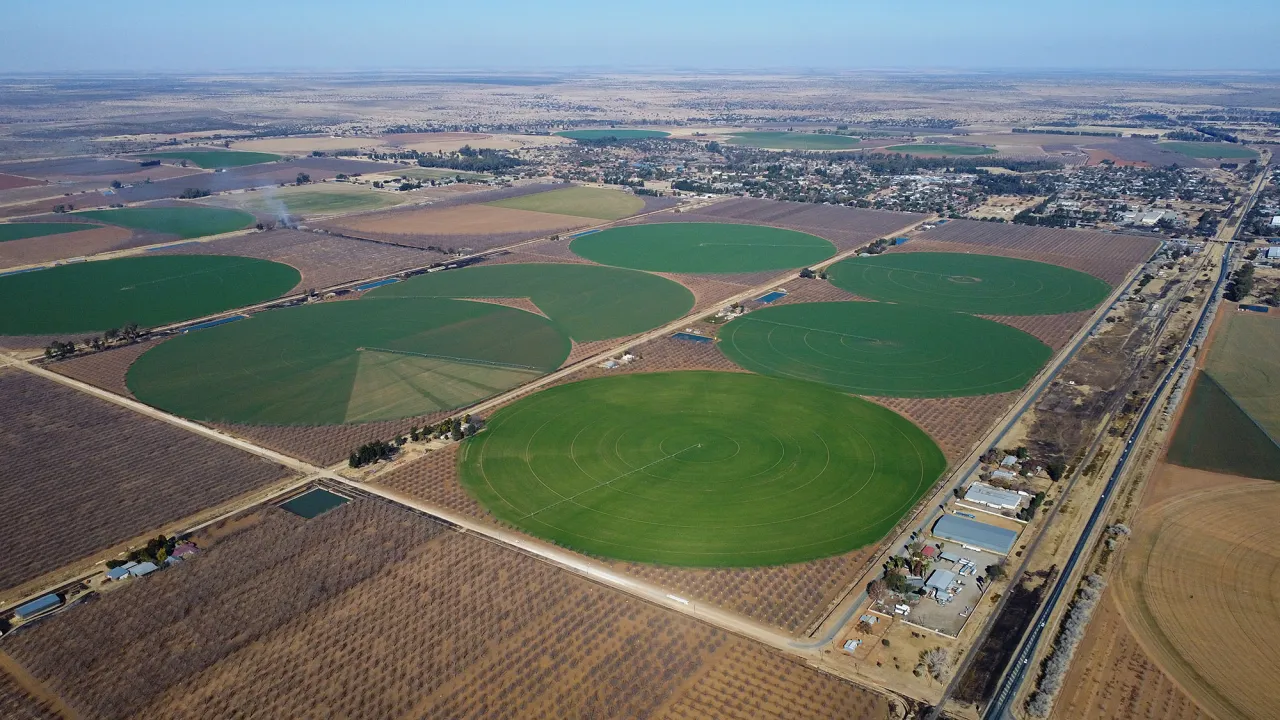
AI can support weather forecasting and the anticipation of drought or flood risks, the identification of plant diseases, the optimisation of fertilisation and irrigation, and the forecasting of food market prices. Pictured are irrigation systems on farmland in South Africa.
Published date
The rapid development and widespread adoption of artificial intelligence (AI) have sparked intense debate about its impact on productivity and labour markets in advanced economies. Less attention has been paid to how AI could help developing countries accelerate their economic development. Sub-Saharan Africa remains the world’s poorest and least developed region, yet the digital economy and the adoption of new technologies are expanding rapidly across the region. This trend can create new business and export opportunities for Finnish companies. AI will not replace the fundamental drivers of development, nor can it solve Africa’s development challenges on its own. However, if deployed effectively, AI could become a significant accelerator of economic development and help address some of the region’s long-standing productivity and skills gaps.
Previous technological innovations have already enabled development gains in Africa. For example, Kenya’s mobile banking service M-Pesa, made it possible to provide digital financial services at scale without an extensive network of traditional bank branches. AI could be the next technological innovation with the potential to address development bottlenecks and accelerate economic growth.
At present, Sub-Saharan Africa’s readiness to adopt AI remains weaker than in many other emerging markets. This is due to persistent infrastructure gaps, uneven levels of digital skills among citizens, limited public-sector capacity and constrained public finances for the investments required.
Yet, AI could be a particularly valuable technology for Sub-Saharan Africa, where many countries face shortages of skill, information and resources across several areas of society. Unlike in many advanced economies, where the debate around AI often focuses on job displacement, in Africa its greatest potential lies in complementing the workforce in sectors where skilled professionals are scarce. In many countries, there are too few doctors, teachers, agricultural advisers and other experts relative to the needs of the population, which means that even relatively simple AI-based solutions can generate significant benefits. In public administration, AI can also support areas such as tax administration, the targeting of services and the streamlining of administrative processes in countries where public-sector resources are limited. AI’s significance and productivity effects are therefore most evident in its ability to supplement scarce resources and allocate them more effectively.
According to a study commissioned by the African Development Bank, AI could increase Africa’s combined GDP by as much as approximately USD 1 trillion by 2035 if adoption succeeds on a broad scale. Growth on this scale would be highly significant, as it would correspond to almost one third of the region’s current GDP. Reaching this estimate would, however, require the right policy choices, investment in infrastructure and data governance, workforce training, and strengthening data protection and cybersecurity regulation.
Agriculture is expected to see the greatest economic gains from AI
Agriculture is the most important economic sector in Sub-Saharan Africa. It employs more than half of the population and is an important driver of economic growth. The sector nevertheless faces major challenges in the near future. First, the population of Sub-Saharan Africa is expected to double by 2050. Agriculture will therefore need to feed a growing number of people, while new farmland cannot be brought into use at the same pace. Increasing productivity on existing cultivated land is therefore becoming increasingly important. At the same time, extreme and unusual weather events caused by climate change are having a growing impact on agricultural seasons and harvests. For example, an exceptionally strong El Niño phenomenon is expected to cause flooding in East Africa and severe droughts in Southern Africa and the Sahel region during the end of 2026 and the beginning of 2027.
AI-based solutions can help farmers improve yields by providing information related to cultivation practices, pest control and adaptation to climate change. AI can support weather forecasting and the anticipation of drought or flood risks, the identification of plant diseases, the optimisation of fertilisation and irrigation, and the forecasting of food market prices. In a report published in the spring, the IMF highlighted that this kind of solutions have already been introduced in countries such as Côte d’Ivoire, Kenya, Nigeria, Mali and Rwanda.
Potential benefits across sectors from industry to health care
In addition to agriculture, sectors such as retail, industry, finance, health care and education could benefit significantly from AI. In health care, AI can be used, for example, to analyse diagnostic images, monitor epidemics and support remote care. In regions where doctors are scarce, AI can help screen cases and allocate limited resources more efficiently. In education, AI-based learning platforms can provide personalised teaching when there is a shortage of teachers. Digital tools can also support the development of vocational skills for a rapidly growing young population.
Despite these opportunities, AI is no panacea for Africa’s structural challenges. The region’s biggest obstacle is the lack of basic infrastructure, which also slows the deployment of AI-based solutions. According to the IMF, only around 53 percent of the population in Sub-Saharan Africa have access to electricity, and only 38 percent have internet access. Power outages, high connectivity costs and limited computing capacity make the widespread adoption of AI technologies more difficult.
Another challenge is the availability of data. Many AI models have been trained primarily on European and North American datasets, which may weaken their performance in African operating environments and local languages. This underlines the importance of developing local data and expertise.
On the other hand, Africa has the youngest population in the world. A young and rapidly growing working-age population may be more capable of adopting new technologies than the quickly ageing populations in many advanced economies.
The capabilities and willingness to use AI exist in the region, but governments’ readiness to adopt AI more broadly may prove to be a bottleneck.
Data centers and other infrastructure projects could open markets for Finnish companies – How Finnvera can finance exports
Before AI can significantly improve productivity and skills, substantial investment will be needed in both physical and digital infrastructure. These are precisely the types of projects where Finnish companies may have solutions to offer. Opportunities for Finnish companies could arise, for example, in data centers and related energy and cooling solutions, electricity transmission, renewable energy, telecommunications networks, cybersecurity, education technology and digital health services.
Finnvera can participate in export financing in most African countries, for example through letters of credit or export credit guarantees, taking into account the countries’ economic and political risks. Further information on country-specific classifications is available in Finnvera’s country classification map.
Author:
For more information about financing opportunities, please contact Senior Advisor Nea Tiililä, who is responsible for country risk management for Eastern and Southern Africa, Southeast Asia and Oceania at Finnvera.
Read also:
Share page: