Content Section

Articles
Poseidon Principles: Finnvera calculated the ship-related CO2 emissions for the fifth time - Monitoring is important, although the calculation method is challenging
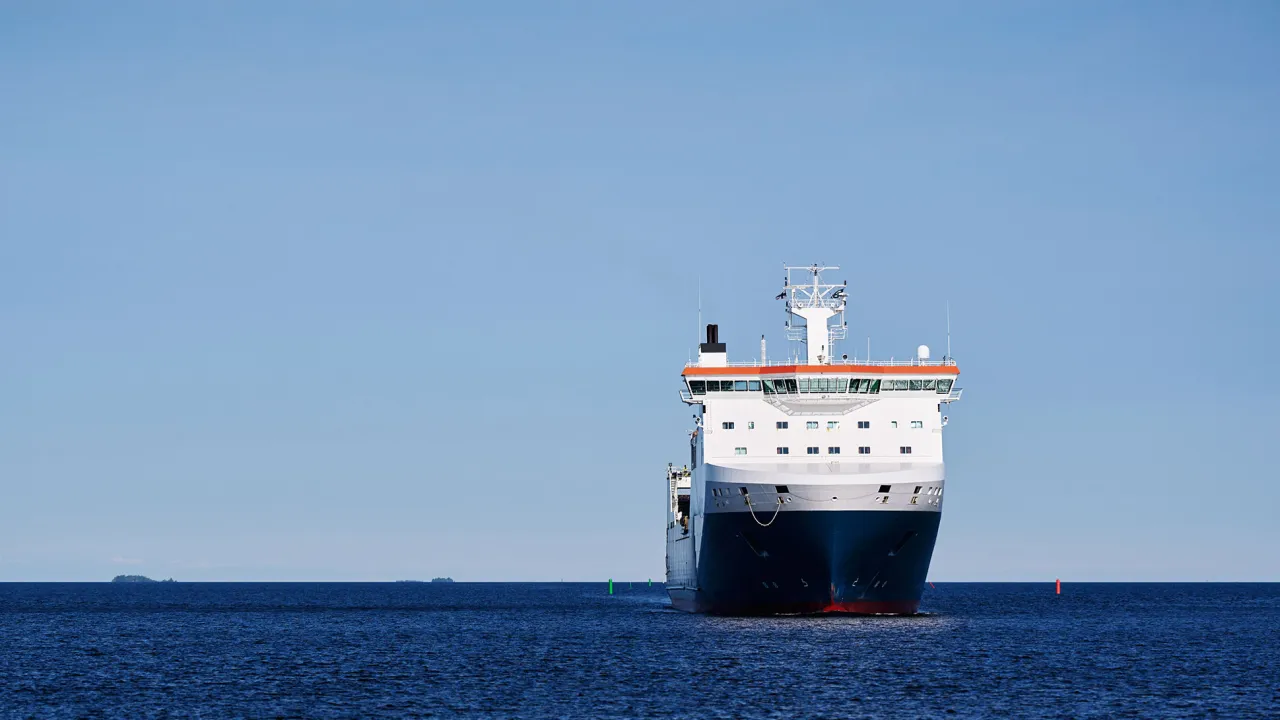
In 2025, Finnvera calculated climate alignment scores separately for cargo vessels and passenger vessels.
Published date
The outlook for cruise shipping is has continued to improve and cruise tourism is growing internationally. Also, the strategic signifigance of the shipping sector as a whole is gaining more importance. The cruise shipping industry is most significant in Finnvera's export credit guarantee exposure. Therefore, monitoring and measuring emissions related to ship finance are also an essential part of Finnvera's climate monitoring. Finnvera calculated the emissions of the ship finance portfolio for the fifth time according to the Poseidon Principles.
The calculation is based on the previous year’s data, thus the CO2 level being reported now has been calculated based on the year 2024.
“In relation to the 2023 IMO GHG Strategy targets, we are closer to the trajectories than last year. The trajectories strongly challenge Finnvera as our ship finance portfolio consists of the world’s largest and most advanced cruise ships and as approximately two thirds of our portfolio covered by the Poseidon Principles are liquified-natural-gas-powered vessels”, says Executive Vice President Jussi Haarasilta.
The impact of the calculation method is most evident in regard to default emission factors of liquified natural gas.
An ambitious target to cut emissions
The original Poseidon Principles iniative is consistent with the policies and ambitions of the International Maritime Organization (IMO), to reduce shipping’s total annual greenhouse gas emissions by at least 50% of 2008 levels by 2050. Aligned with this target Finnvera’s score exceeded the trajectory by 30.7% (2024: 37.4%). In relation to the IMO Revised GHG Strategy target Finnvera’s score exceeded the trajectory by 38.6% (44.1%).
Finnvera finances new, technologically advanced vessels. As the calculation is based on the CO2 emissions in relation to the size of the vessel, the distance travelled, as well as the amount of credit related to the vessel, these factors affect the emissions score and annual volatility
Finnvera has developed its climate targets and reporting
The calculation has improved the quality of the data as a source for assessment, based on which we are also able to specify our reporting on climate impacts. For its operations Finnvera has set a climate target in line with the Paris Climate Agreement’s 1.5. degree target. In November 2024, Finnvera joined the Net-Zero ECA Alliance, a UN initiative, whose goals include creating a measurement method for setting, reporting and monitoring emissions targets and building a common vision for the net-zero goal in export financing.
”In our business activities we emphasize active dialogue with the cruise shipping industry widely from the engine technology developers to shipyards and shipping companies. Ships are ordered far into the future, and technology solutions have to be made at an early stage. The solutions therefore have far-reaching effects. We have good opportunities to influence the development of climate solutions, as we essentially finance new technology aiming to build more environmentally efficient ships. Finnvera is continuing to work on developing climate targets and measures according to the Net-Zero Export Credit Agencies Alliance guidelines.”
Further information:
Jussi Haarasilta, Executive Vice President, Large Corporates, Finnvera, tel. +358 29 460 2601
This is how the CO2 level is calculated according to Poseidon Principles
Poseidon Principles measures carbon intensity. The data based on which the overall climate alignment score is calculated is distance travelled, amount of fuel consumption for each fuel type, and size of the vessel. The outstanding debt per vessel also play a role when calculating the weighted average of the scores. The calculation is based on a formula that takes into account the distance traveled by the vessels during the year.
The Poseidon Principles members are leading ship financiers, such as international banks, but there are export credit agencies among them. The Poseidon Principles comprises of 36 signatories from 14 different countries, representing almost three-quarters of the global ship finance portfolio. The signatories are leading ship financiers, such as international banks, but there are export credit agencies. Finnvera became signatory in April 2021.
Read also:
Poseidon Principles press release and report 15 December 2025:
Global shipping finance transparency initiative reveals closer alignment with climate goals
Poseidon Principles: Annual Discosure Report 2025 (PDF)
Share page: